
Research Projects
Fast tensor decomposition algorithms
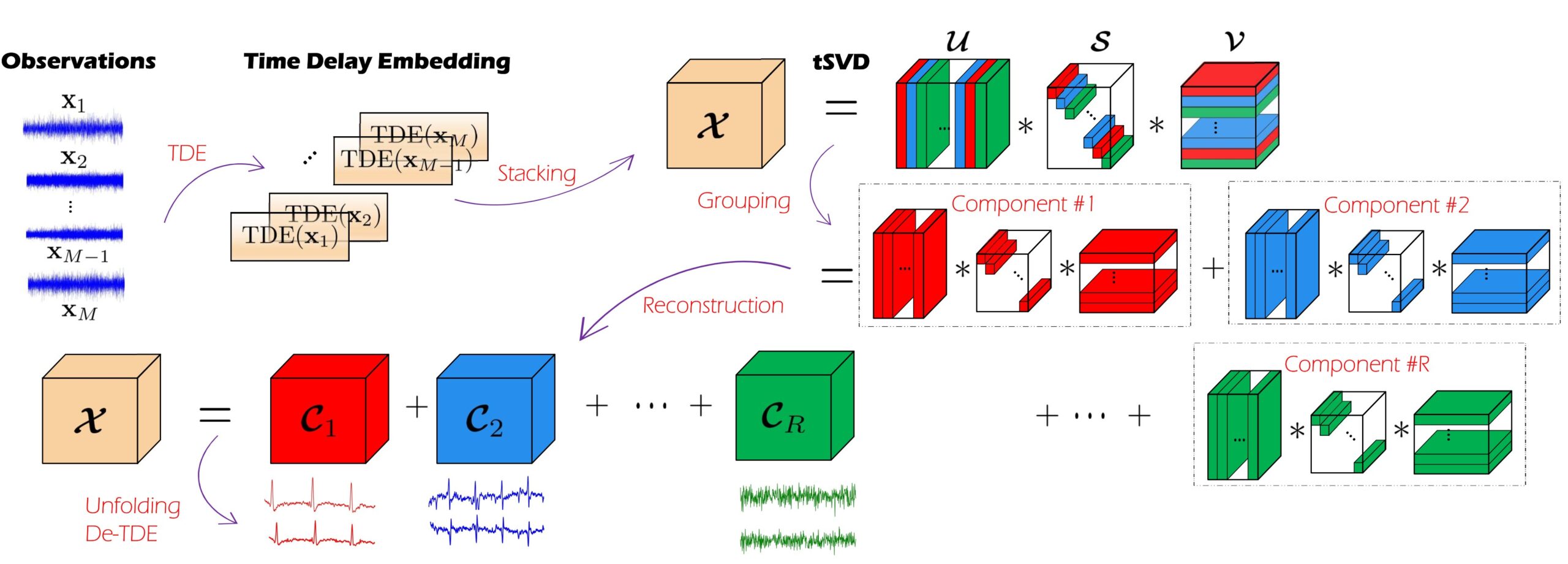
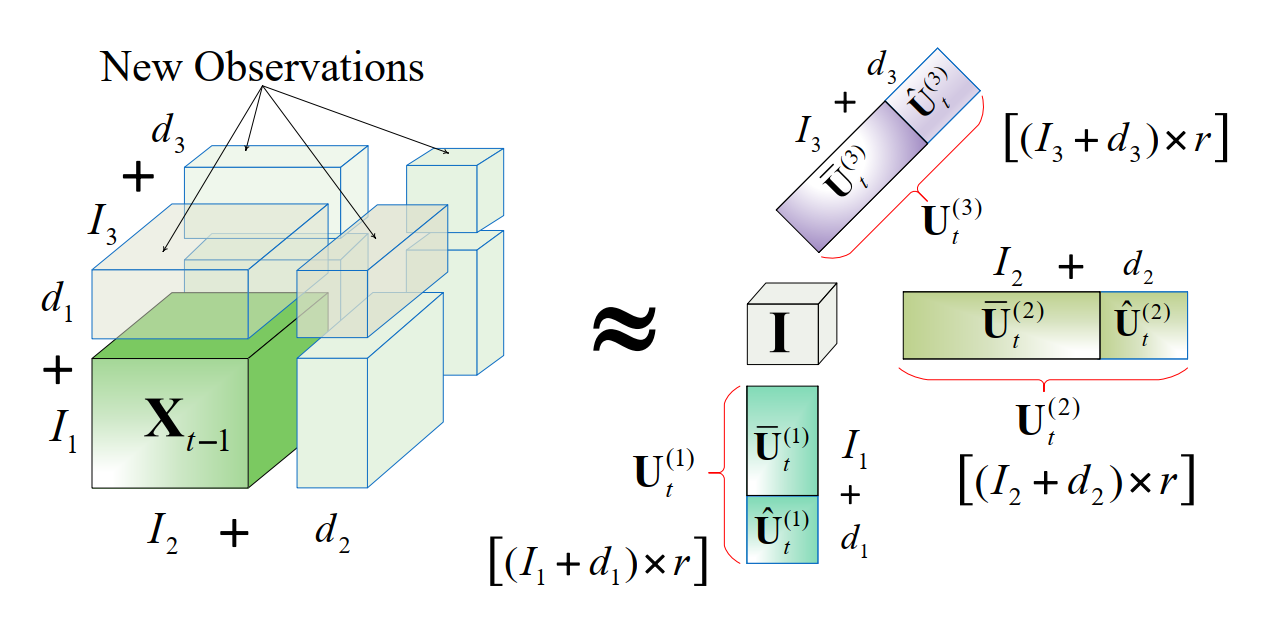
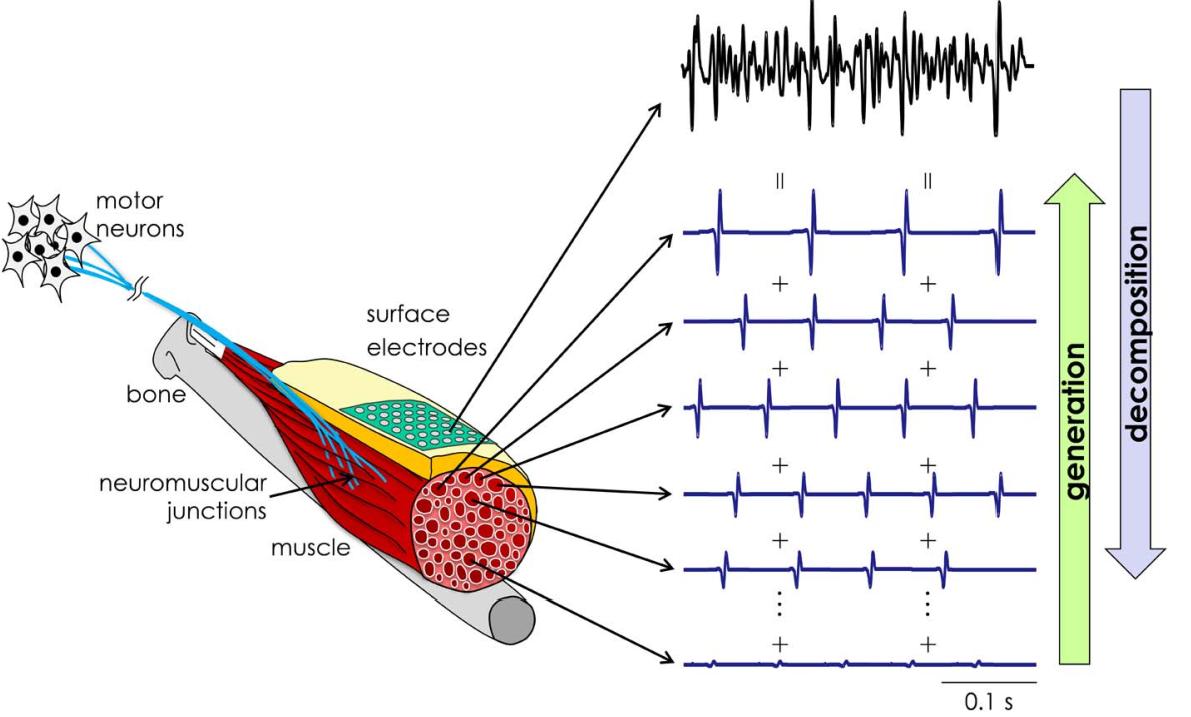
Large volumes of data are being generated at any given time, especially from transactional databases, multimedia content, social media, and applications of sensors in the Internet of Things. When the size of datasets is beyond the ability of typical database software tools to capture, store, manage, and analyze, we face the phenomenon of big data for which new and smarter data analytic tools are required. Classical tensor decomposition algorithms cannot handle the situation when the data are not only big but also streaming. To tackle this situation, in this Project we will develop fast adaptive tensor decomposition algorithms, with low or average complexity for third-order big and streaming data tensors. The enabling ingredient for the above development is the generalized minimum noise subspace method (GMNS), an excellent method for fast subspace tracking. To illustrate the efficiency of the proposed algorithms, we will apply them to analyzing long and multi-channel EEG data. In particular, we will design a multi-stage system for automatic detection epileptic spikes in multi-channel EEG data; such a system is useful for 24-hour monitoring of epilepsy patients.
Selected publications
- Nguyen Linh Trung, Nguyen Viet Dung, Messaoud Thameri, Truong Minh Chinh, and Karim Abed-Meraim. Low-complexity adaptive algorithms for robust subspace tracking. IEEE Journal of Selected Topics in Signal Processing, vol. 12, no. 6, pp. 1197-1212, 2018.
- Le Trung Thanh, Nguyen Linh Trung, Nguyen Viet Dung, and Karim Abed-Meraim. Three-way tensor decompositions: A generalized minimum noise subspace-based approach, REV Journal on Electronics and Communications, vol. 8, no.1–2, pp. 28–45, 2018.
- Nguyen Thi Anh Dao, Nguyen Linh Trung, Nguyen Van Ly, Tran Duc Tan, Nguyen The Hoang Anh, and Boualem Boashash. A multistage system for automatic detection of epileptic spikes. REV Journal on Electronics and Communications, vol. 8, no.1–2, pp. 1–13, 2018.
- Nguyen Thi Anh Dao, Le Trung Thanh, Nguyen Linh Trung, and Le Vu Ha. Nonnegative tensor decomposition for EEG epileptic spike detection. NAFOSTED Conference on Information and Computer Science (NICS), December 2018, Hanoi, Vietnam. [Best paper award].
- Viet-Dung Nguyen, Karim Abed-Meraim, Nguyen Linh-Trung, and Rodolphe Weber. Generalized minimum noise subspace for array processing. IEEE Transactions on Signal Processing, 65(14):3789–3802, July 2017.
- Viet-Dung Nguyen, Karim Abed-Meraim, and Nguyen Linh-Trung. Second-order optimization based adaptive PARAFAC decomposition of three-way tensors. Digital Signal Processing, 63:100–111, April 2017.