Prof. Guy Nagels and Prof. Nguyen Linh Trung present in the seminar “AI and Human Brain” at VNU-UEd
On the morning of April 10, 2026, the scientific seminar on “AI and Human Brain” was successfully held at the University of Education – Vietnam National University, Hanoi (VNU-UEd), with the participation of a large number of lecturers, researchers, master’s students, and Ph.D. candidates from the university. The program was marked by two high-quality presentations by Prof. Guy Nagels and Prof. Nguyen Linh Trung, offering updated perspectives on the relationship between artificial intelligence and neuroscience, as well as modern research methodologies.
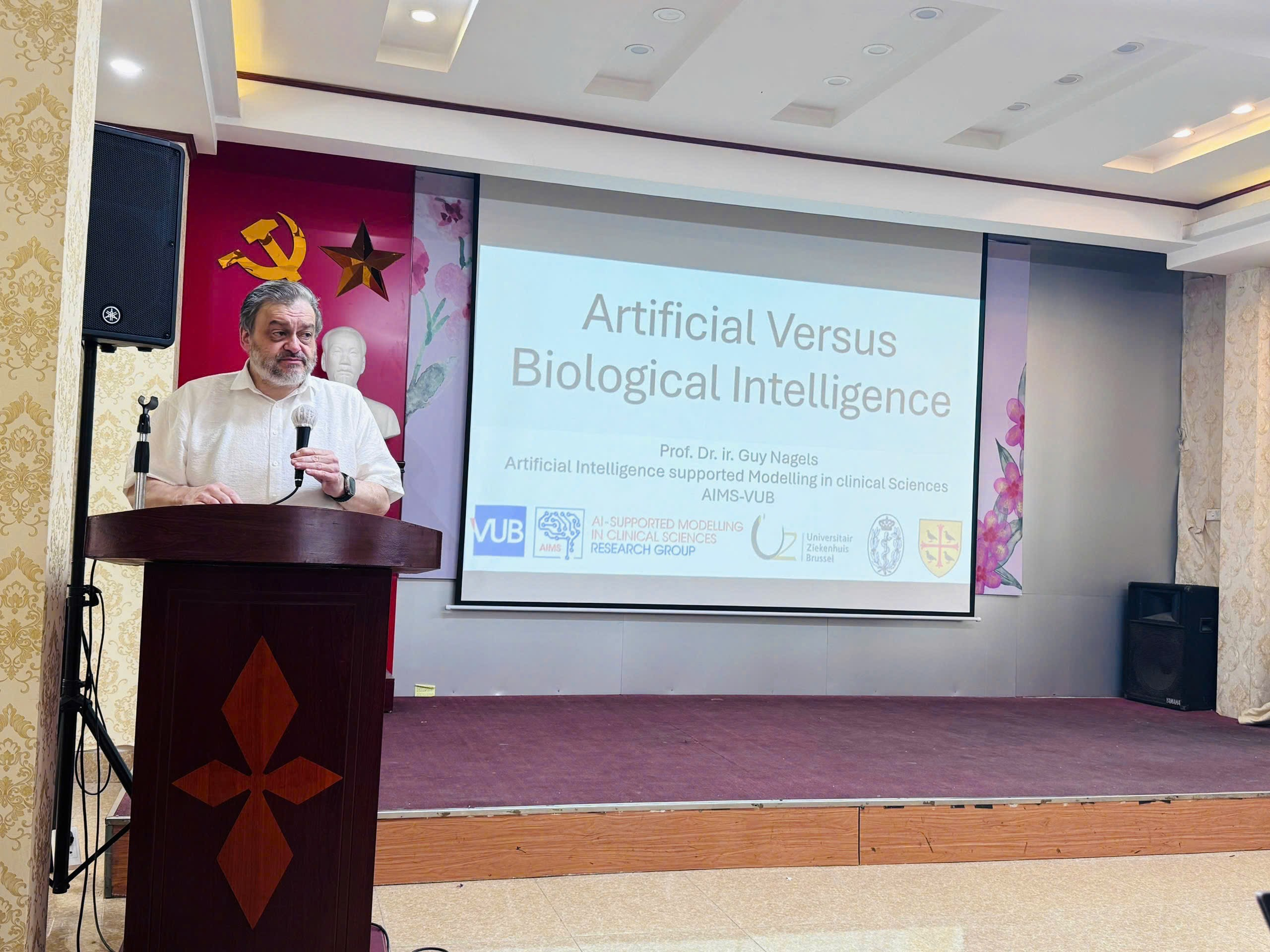
Opening the program, Prof. Guy Nagels – a neurologist, rehabilitation physician, and applied computer science engineer; currently working at the Department of Neurology, University Hospital Brussels (UZ Brussel) and serving as Head of the AIMS Research Group (Artificial Intelligence Supported Modelling in Clinical Sciences) at the Vrije Universiteit Brussel (VUB), Belgium – delivered a presentation on the theme “Artificial Intelligence and Biological Intelligence.”
Prof. Guy shares insights on the close connection between artificial intelligence and biological intelligence.
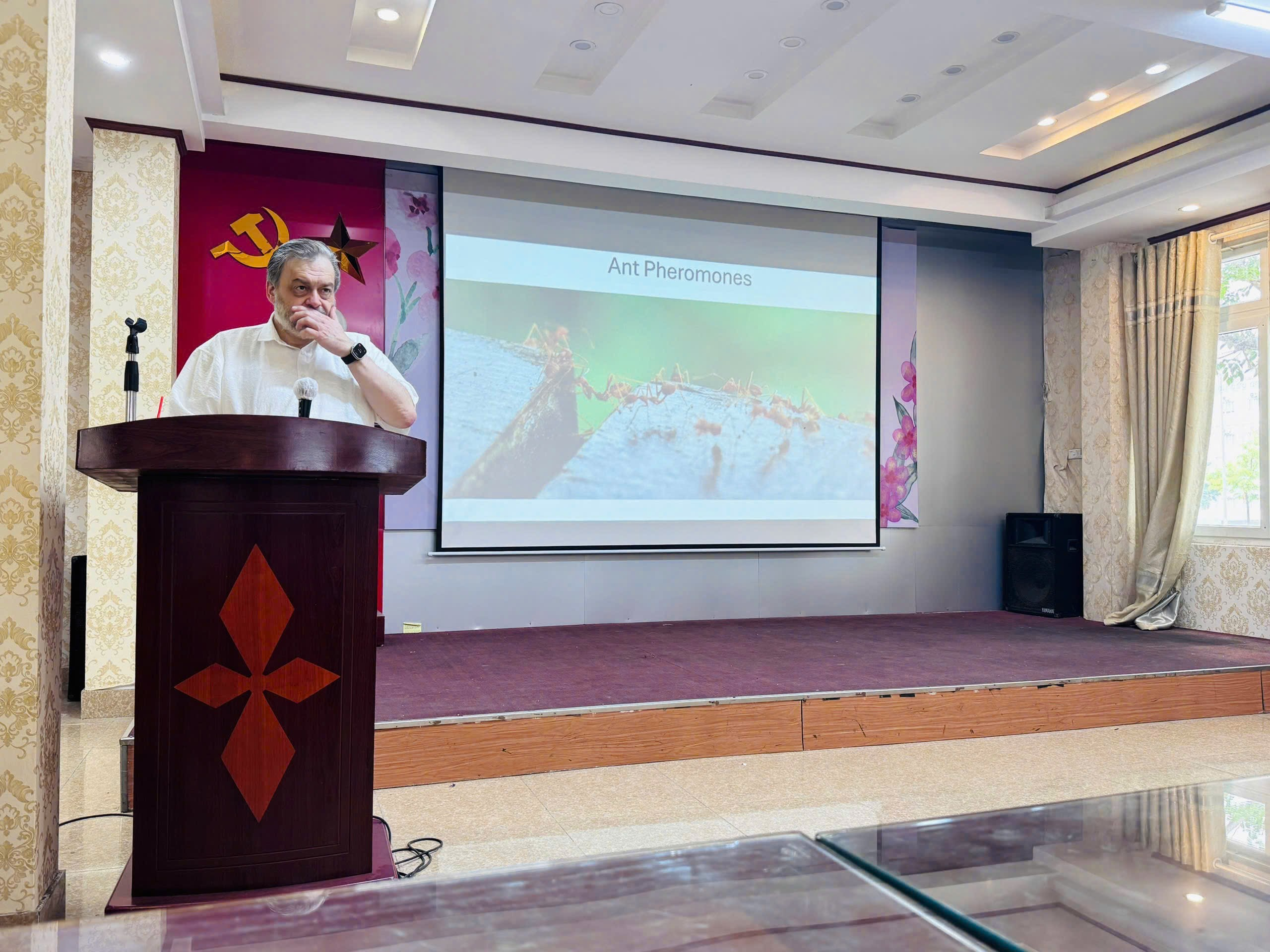
At the beginning of his talk, Prof. Guy noted that although these two intelligence systems are built on different foundations, they can complement each other powerfully. A fascinating highlight of his presentation was the example of “Ant pheromone trail: How AI affects nature.” Prof. Guy demonstrated that the pheromone-trail mechanism used by ants – a simple yet effective optimization strategy in nature – has inspired numerous AI algorithms, particularly in the fields of optimization and pathfinding. This illustrates that artificial intelligence not only learns from nature but can also be applied to simulate and deepen our understanding of complex systems in the natural world.
A very intuitive and accessible example of how AI models are inspired by biological swarm mechanisms.
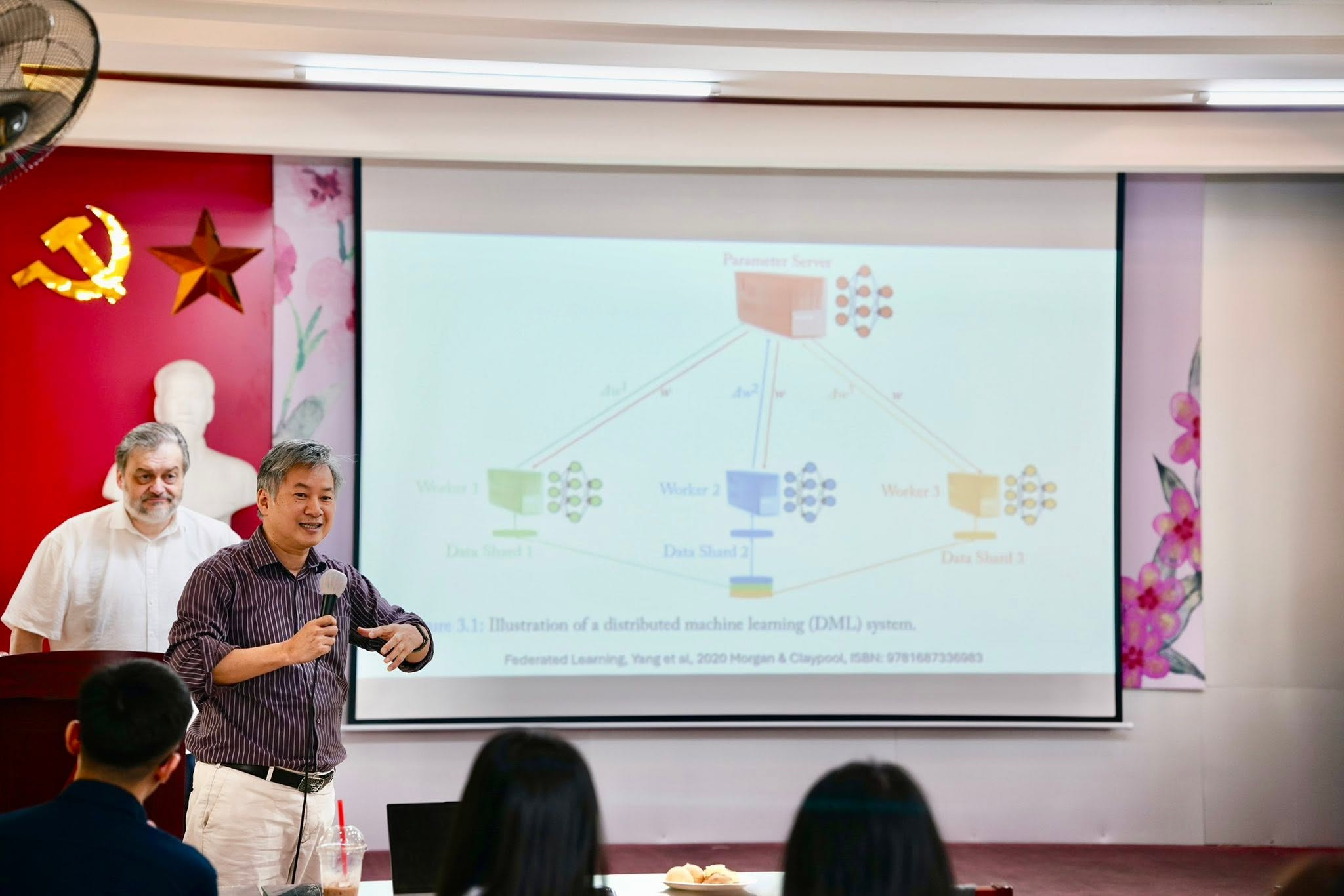
Prof. Guy then introduced a key research direction of the group: “Federated Learning in Medical,” a solution to overcome the limitations of medical data availability in building AI models for healthcare. He provided an overview of concepts ranging from Transfer Learning and Distributed Learning to Federated Learning, emphasizing the advantage of training models on distributed data without centralizing it – a critical factor in the context of patient data privacy. This project is currently being implemented at University Hospital Brussels (UZ Brussel), Bach Mai Hospital (Vietnam), and VNU University of Engineering and Technology (VNU-UET), marking a significant step forward in international research collaboration.
Prof. Guy and Prof. Trung answer questions from attendees about the federated learning approach.
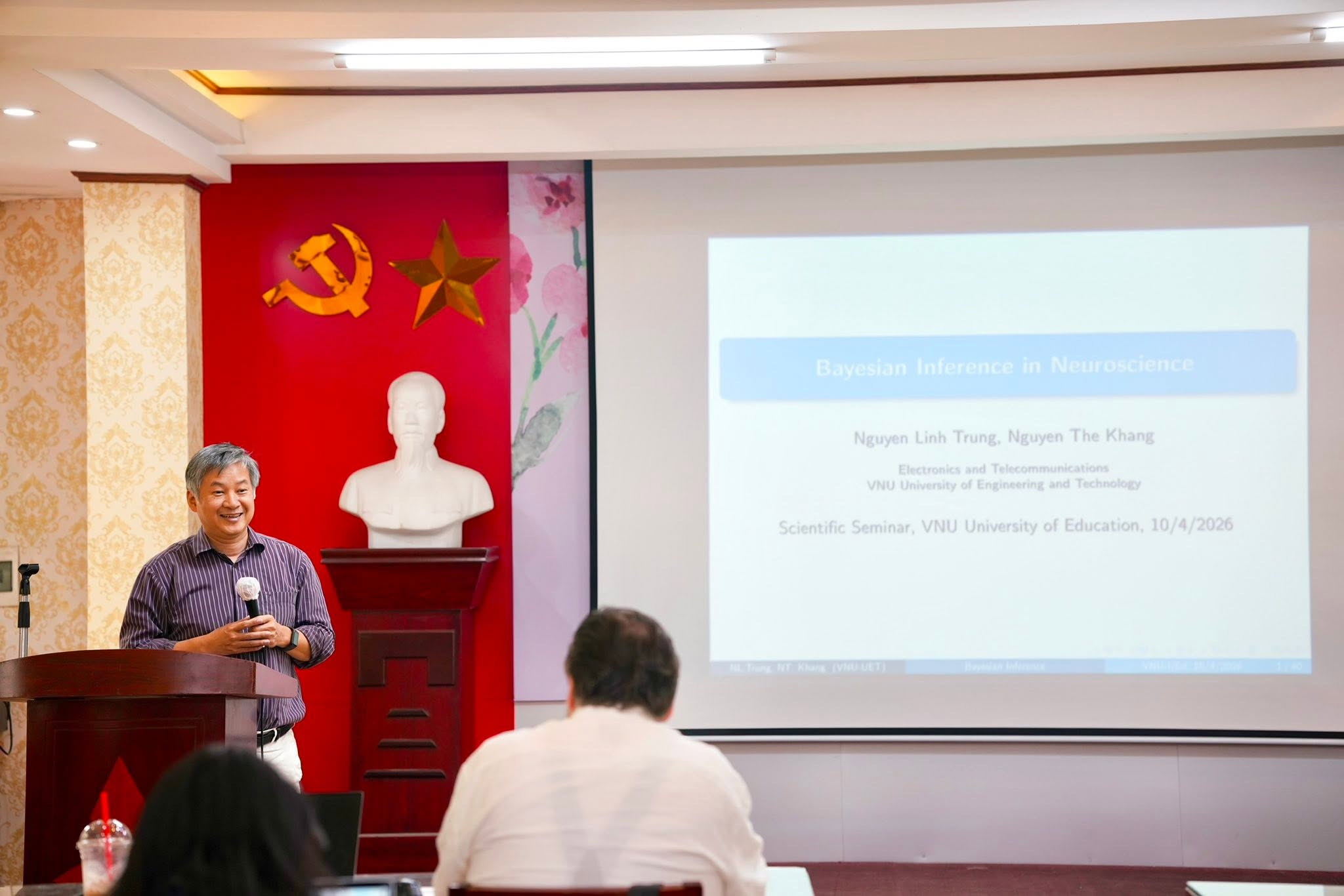
The second presentation was delivered by Prof. Trung – Head of the AVITECH Research Group at VNU-UET – on the topic “Bayesian Inference in Neural Science.” Prof. Trung offered a fresh perspective by applying hypothesis testing through the Bayesian approach to evaluate the efficacy of Lecanemab in treating Alzheimer’s disease.
Prof. Trung enthusiastically shares insights on the application of Bayesian inference in neuroscience.
Based on a clinical trial conducted by a pharmaceutical research group with a well-defined and detailed treatment protocol, Prof. Trung demonstrated how hypothesis testing can be constructed using the Bayes Factor (Bayesian approach) and p-value (Frequentist approach). The results showed that both methods reached similar conclusions regarding Lecanemab’s effect in slowing cognitive and functional decline in Alzheimer’s patients. However, he also pointed out the limitations of the Frequentist approach based on NHST (null-hypothesis significance testing), particularly the p-hacking techniques that can manipulate p-values to produce unreliable conclusions.
In contrast, the Bayesian approach allows conclusions about hypotheses to be built upon prior information and updated based on new observations. This enables a more flexible and transparent assessment of the evidence supporting each hypothesis. Prof. Trung also highlighted common misunderstandings about p-value interpretation in NHST and emphasized the advantages of Bayesian inference. He concluded that combining both methods can help balance the limitations of each approach, yielding more robust and reliable research outcomes.
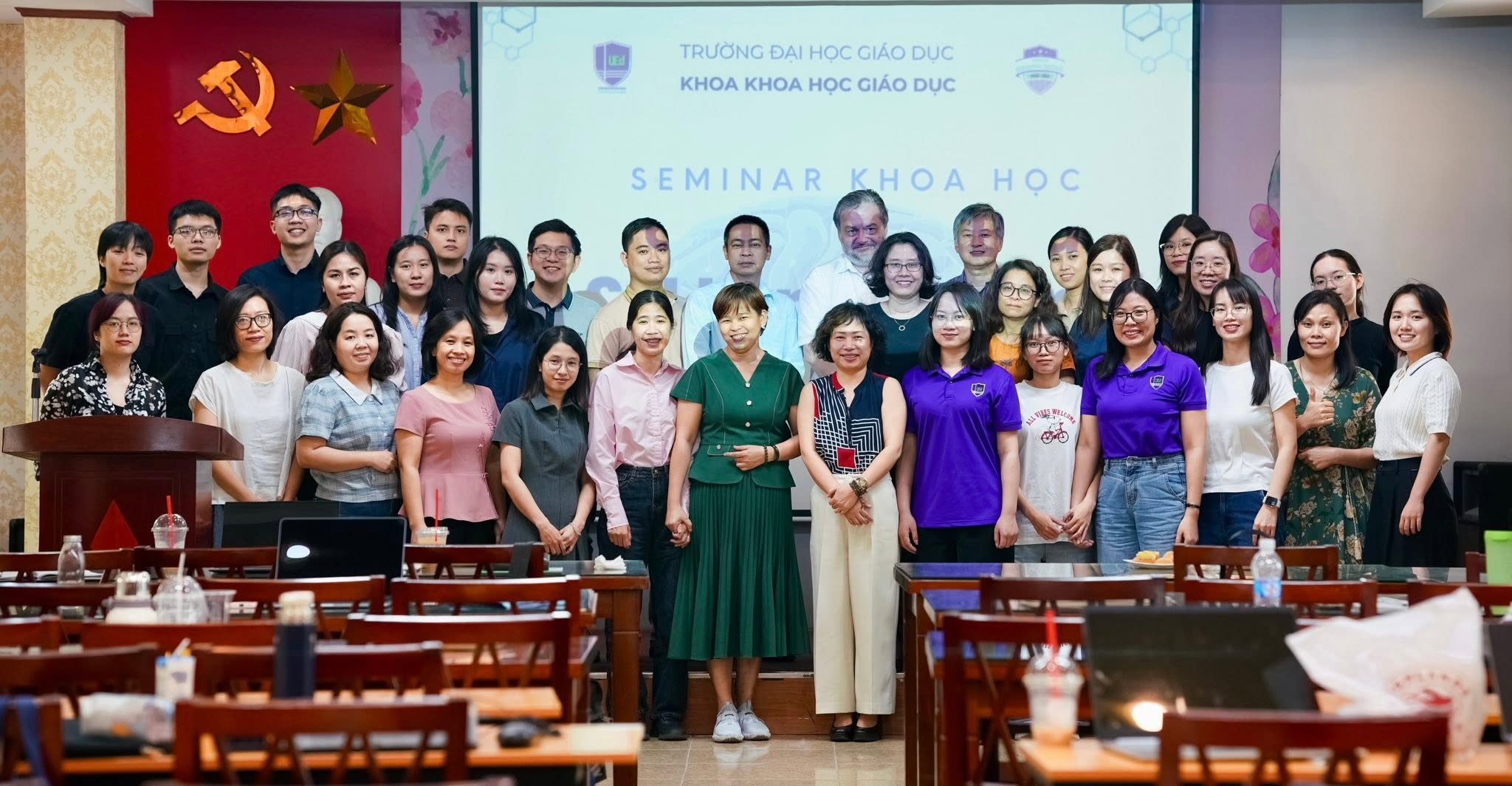
A group photo of seminar participants at the University of Education – VNU.
Notably, the interactive discussion between the speakers and attendees was lively and engaging, fostering an open and intellectually stimulating academic atmosphere. Many intriguing questions were raised concerning the practical applications of Federated Learning in Vietnam, as well as the potential for applying Bayesian inference in other clinical research contexts. The seminar was not only a platform for knowledge sharing but also opened up numerous opportunities for future research connections and collaborations among participating institutions: the University of Education – VNU, VNU University of Engineering and Technology, Bach Mai Hospital, and international partners such as the Vrije Universiteit Brussel (VUB) in Belgium.
Taken together, the topics presented at the seminar painted a comprehensive picture of the intersection between computer science and medicine: from drawing inspiration from nature to develop AI, to applying AI in healthcare through federated learning, and finally to modern statistical methods for accurately and transparently evaluating treatment efficacy. These promising research directions hold significant potential for contributions to both fundamental research and clinical applications in the years ahead.
We sincerely thank all the speakers and participants for contributing to the success of this program!